
My Art Process
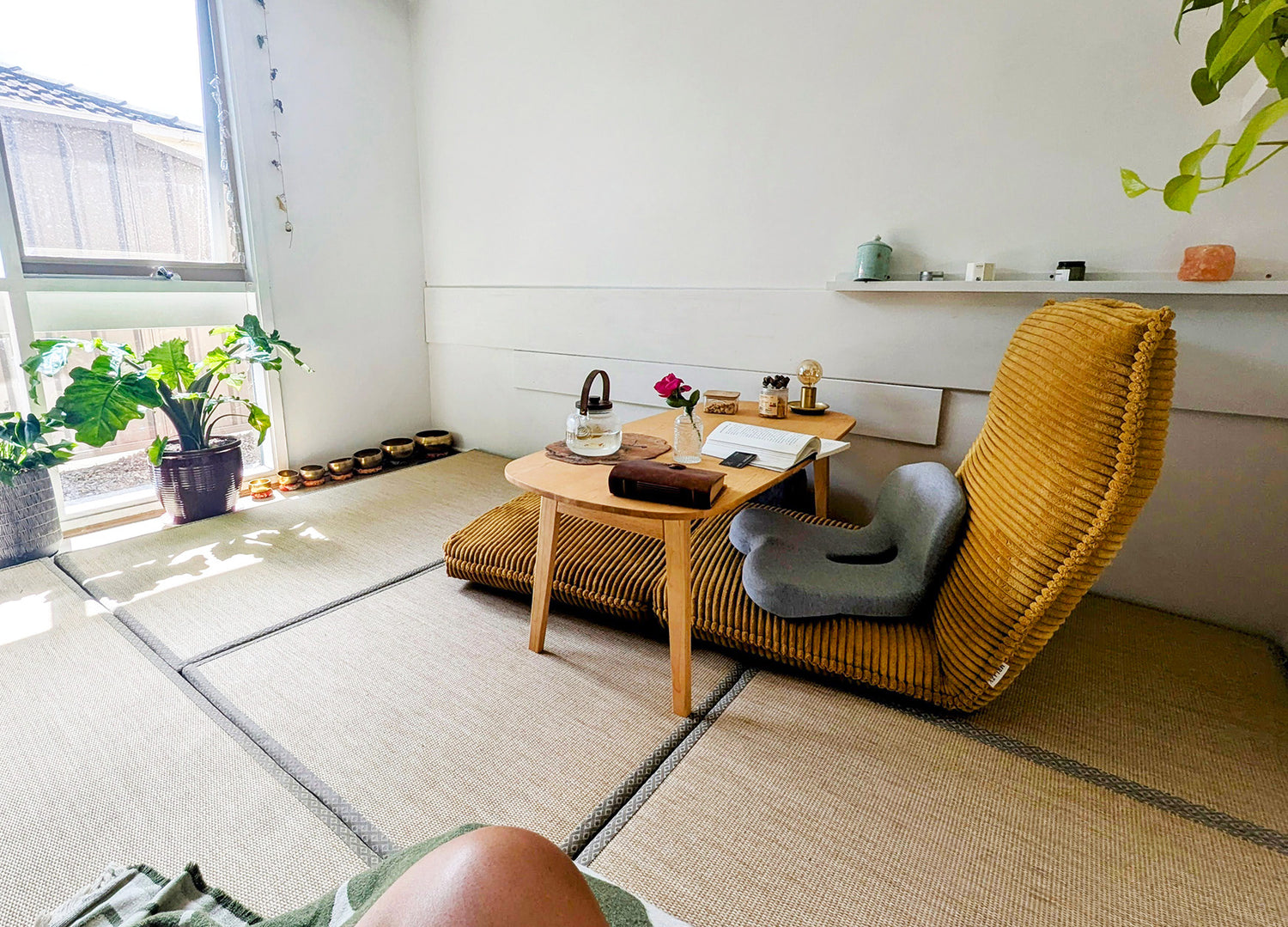
1. Ritual as Foundation
I only create when the energy is aligned—clear, high in frequency, and unmistakably ready. But when the creative impulse arrives, I act immediately. There is no hesitation. The field has opened. I enter.
Ritual prepares the container. I begin with meditation and yoga to tune the body. I clear the physical space, light incense, and pour water to attune the environment. Nothing is random. The space must be quiet. The body must be listening.
This ritual is not performance—it’s structural. Without it, the field isn’t safe to open. Sometimes, it takes hours. Sometimes, it begins long before I touch a brush.
I enter the work not with ideas, but with attention. I’m not here to control the image. I’m here to meet it. Only in that state can truth take form.
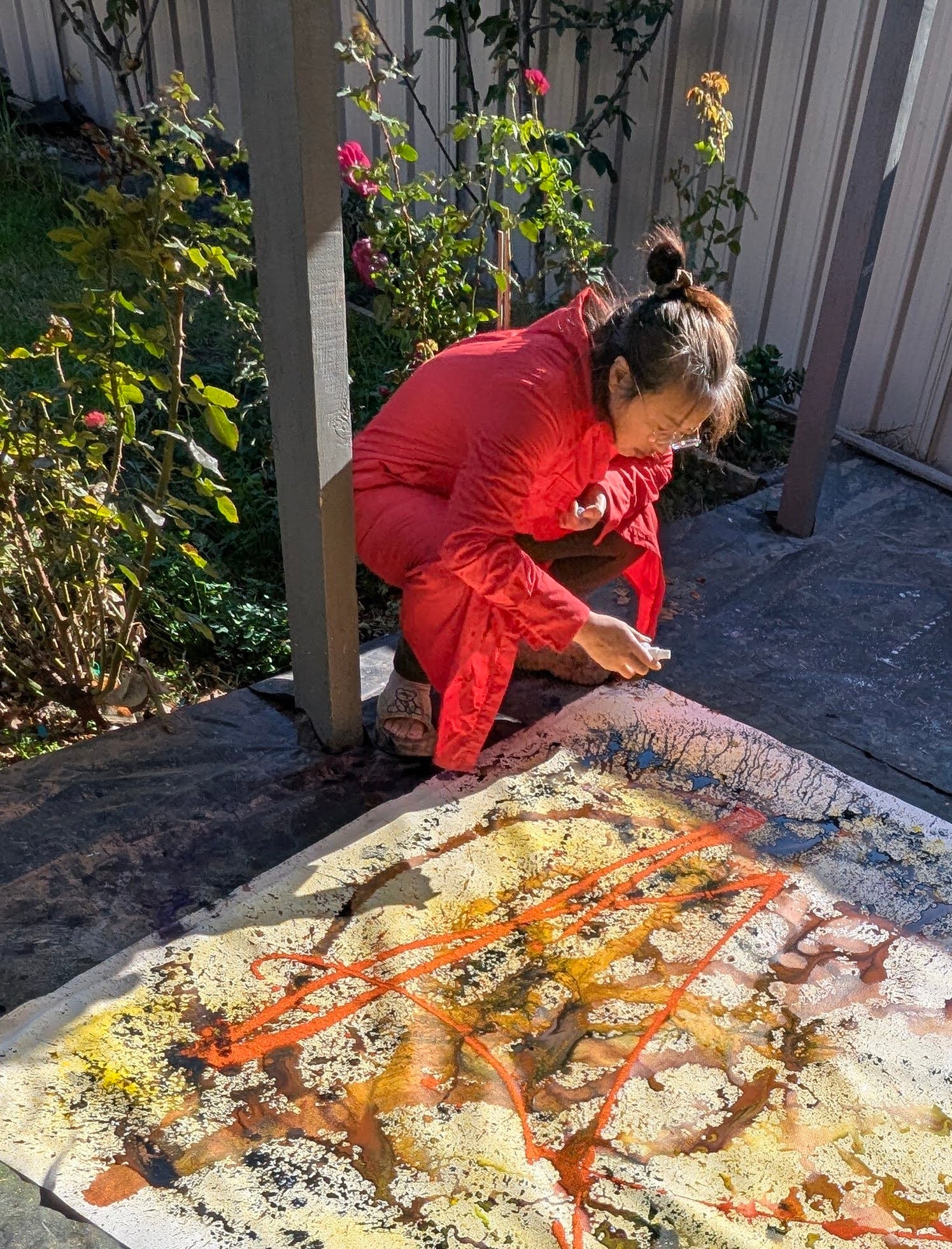
2. Ground Layer Transmission
The first layer is created on unstretched canvas, usually outdoors or under open structure. I work with water-based acrylics and inks—carrying the initial transmission. I don’t paint images—I lay frequency. Sometimes the wind moves the pigment. Sometimes the water carries the mark. I stop when the background reaches a coherent frequency that holds.
Then I let it dry overnight. This resting stage is essential. When the base has settled, the next layer begins—not on top, but through it.
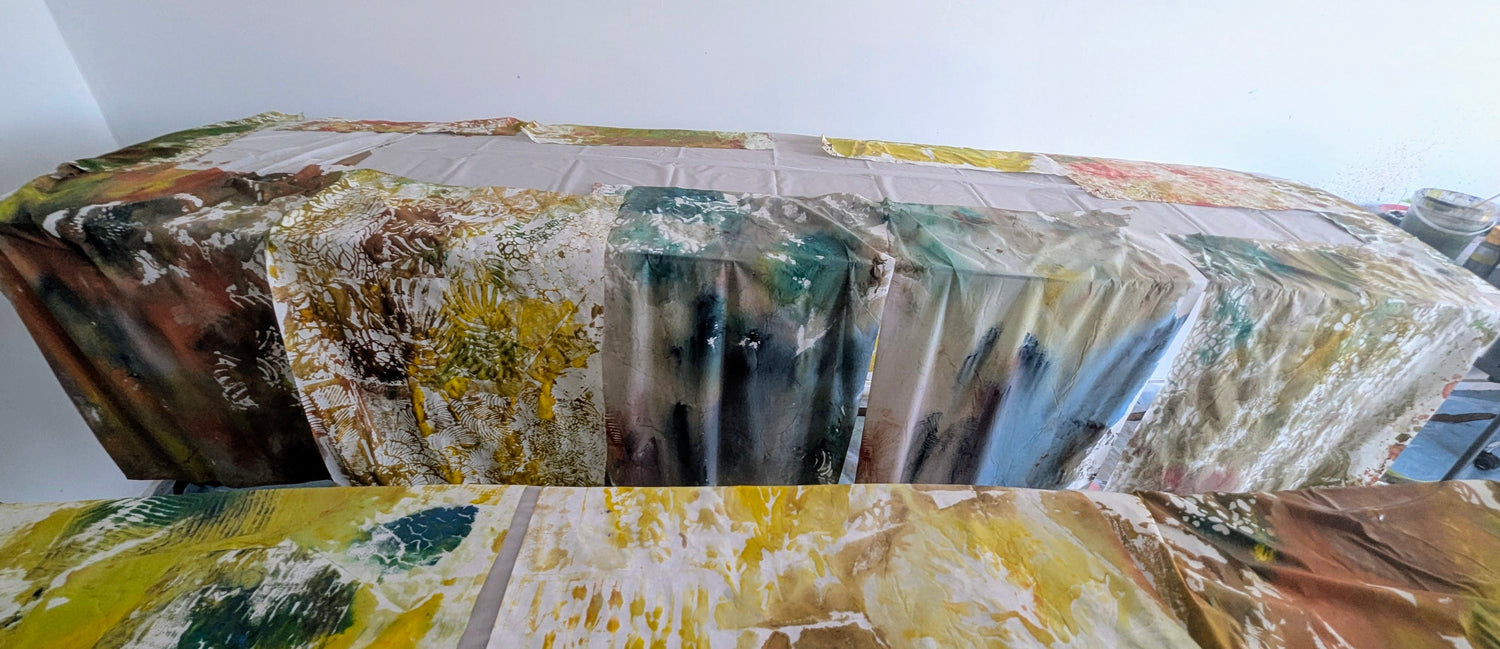
3. Rice Paper Creation
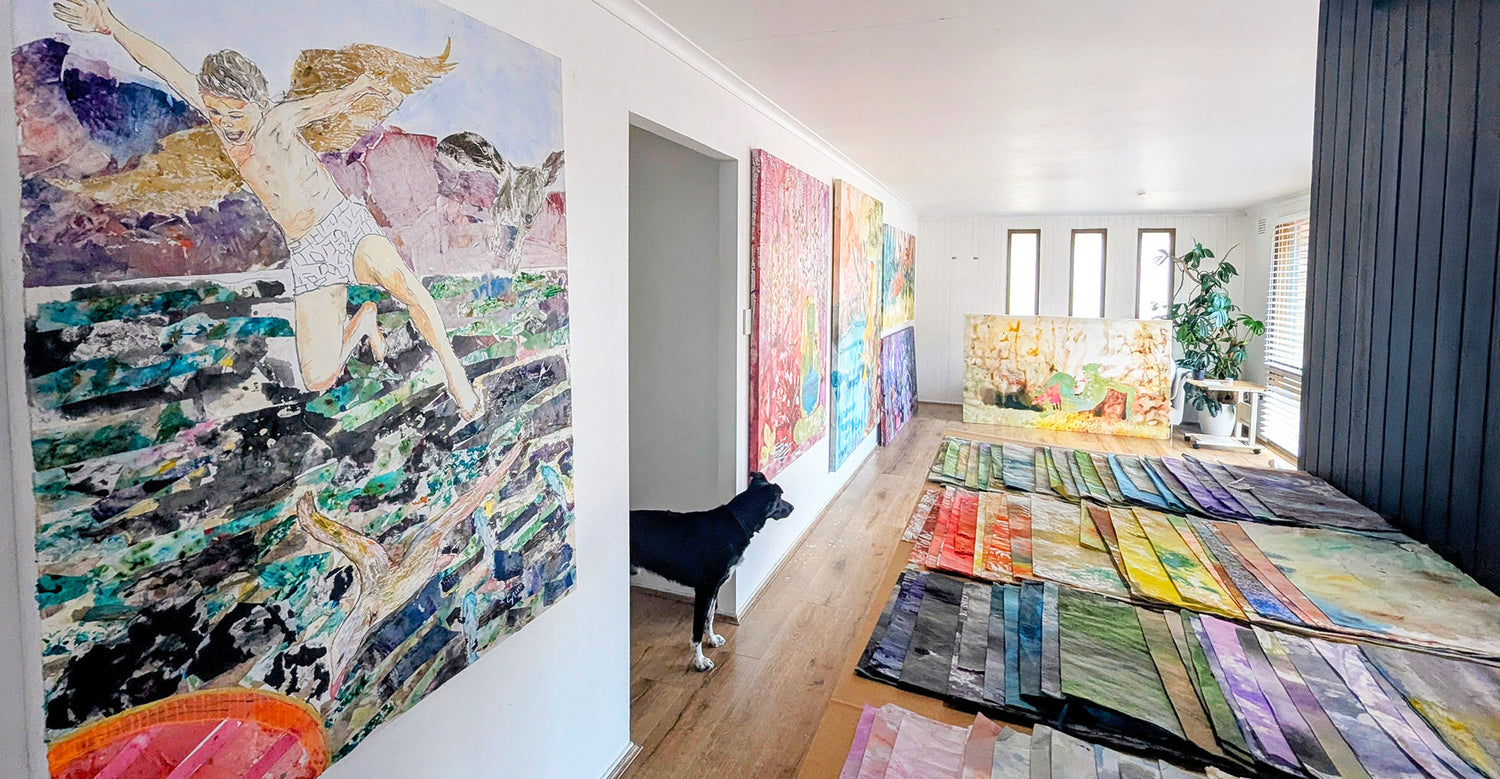
I make my own rice paper from scratch—dyed, painted, patterned, and sometimes marked with specific intent. Each batch is made for a purpose, guided by the frequency received the day before. Colour, texture, and structure are created to match that channel.
I don’t use them all. Most are discarded. Only fragments that align fully are kept. Even then, they are torn by hand and refined again. It’s a long process—not decorative, but devotional. Each piece of paper must match the background’s frequency exactly, or it is not used.
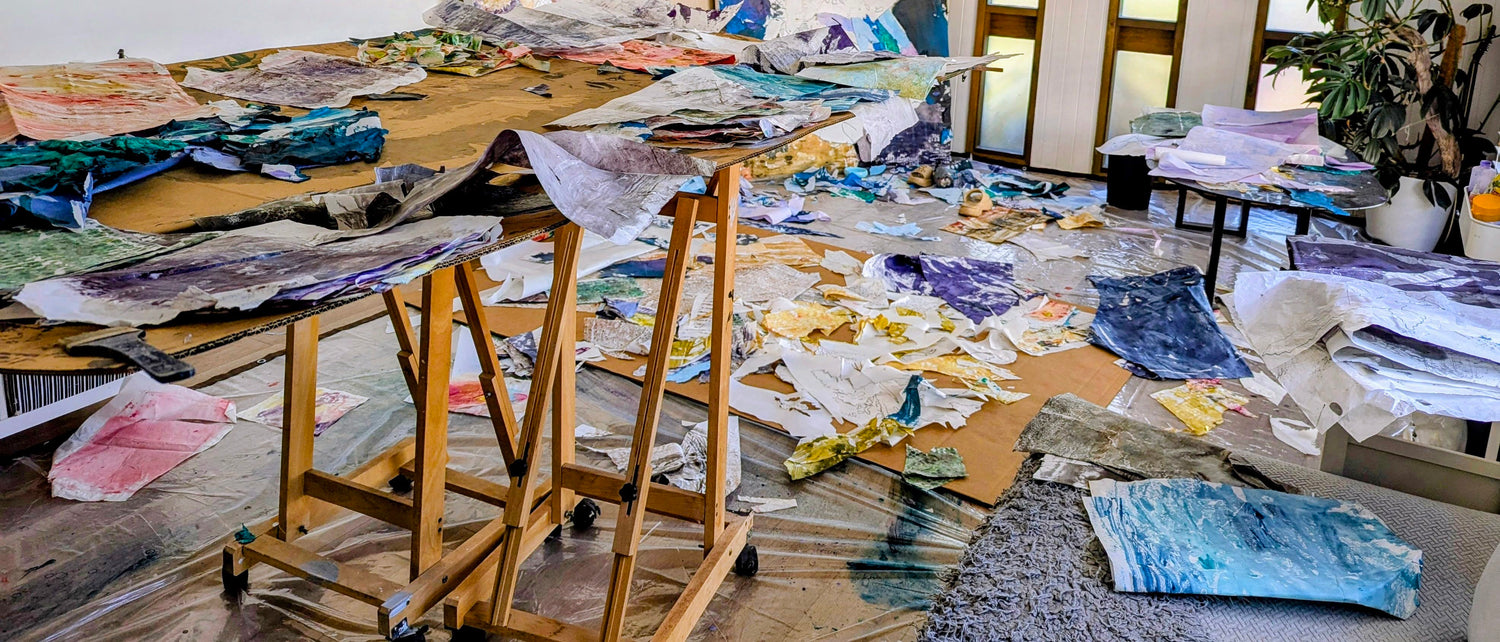
4. Forming and Painting
I tear each piece by hand and place it without plan—guided by feel, not thought. Movement stays in rhythm with the field: swift when clear, still when needed. I paint only in response, not to decorate but to anchor.
I paint on top when called, not to add beauty but to ground the whole. The work completes itself when everything locks into place—not by technique, but by energetic coherence. It may not be perfect. It may not follow convention. But it is whole. It carries frequency.
The process is organic. It may move through chaos, but always settles into coherence. Only what aligns remains. Nothing is added unless it belongs. This is how truth takes form.
5: Completion and Coherence
When a piece is complete, I stretch it on timber, photograph it, and frame it in oak if needed. Every part of the process—including presentation—is done within the same field. Nothing is outsourced. Nothing is separate. The entire process is one ritual.